THE CONNECTIONS BEHIND THE INCIDENTS
Incident linkage map
Published snapshotA view of how publicly reported incidents connect, with organization names and identifiers removed.
Each dot is an incident. Solid lines show recorded relationships; node colors distinguish upstream, downstream and unlinked incidents. Positions show connections, not geography or severity.
- Direct incidents
- 604
- Upstream incidents
- 101
- Standalone incidents
- 503
934 downstream records excluded, including incidents with both roles.
Direct incidents = upstream + standalone, based on recorded causal links. Standalone incidents have no upstream or downstream causal links, but may have other links, such as separate events at the same organization.
- Incidents in snapshot
- 1538
- With recorded connections
- 1092
- Recorded connections
- 1054
- Connected networks
- 85
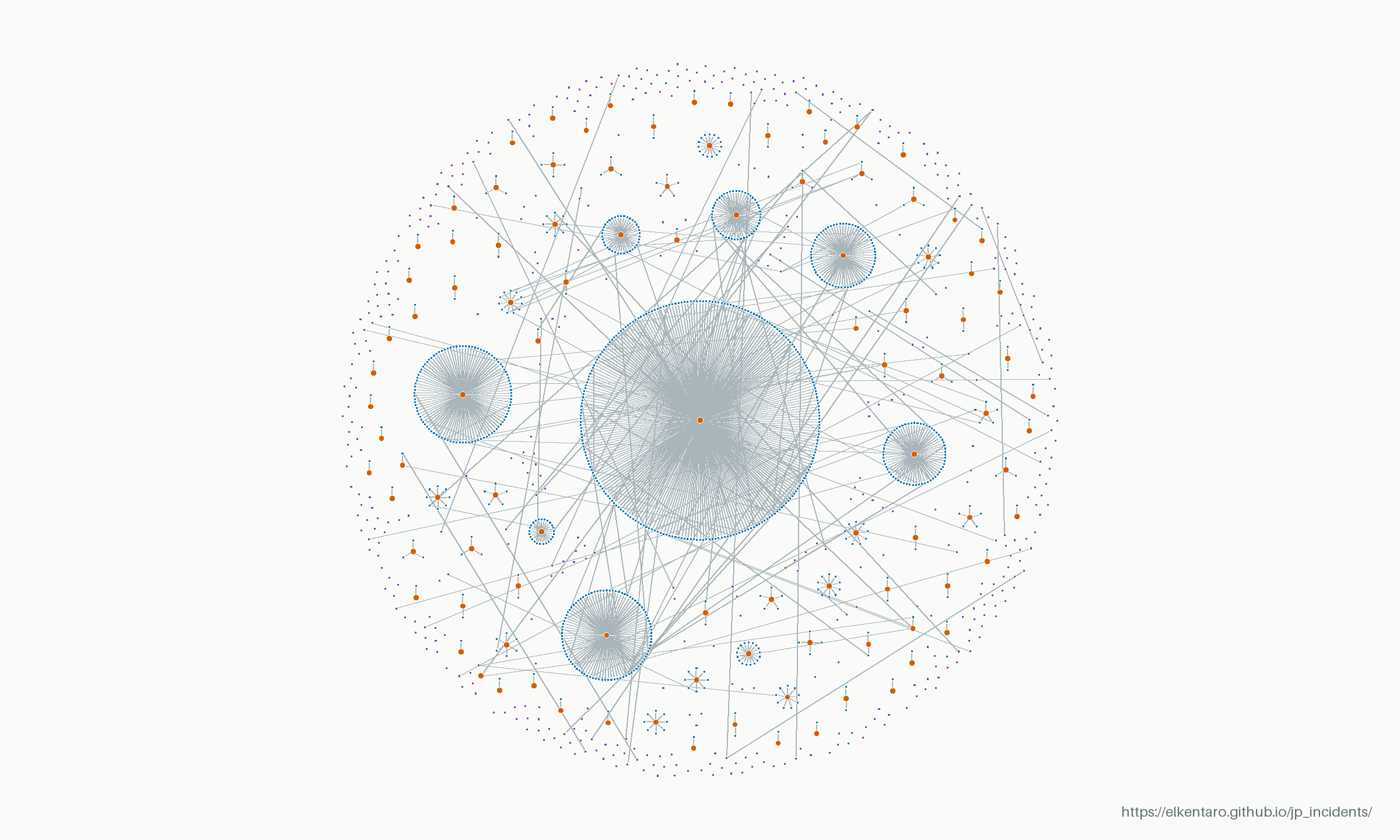
- Upstream
- Downstream
- Unlinked(446)
- Both roles
- Other related
- Recorded relationship
Unlinked nodes have no recorded connection; proximity does not imply a relationship.
Reading the map
Orange marks upstream incidents, blue downstream incidents, and purple unlinked incidents with no recorded connection. Teal marks incidents with both upstream and downstream roles; charcoal marks other related incidents. A missing connection does not establish that two incidents are unrelated.
About this snapshot
The static image is refreshed when published incidents or relationships change, and at least every 24 hours during normal publication. Larger upstream clusters have extra spacing to keep their victims apart. Names, incident IDs, source links and incident dates are omitted; the connection pattern is retained. It is an overview of recorded relationships, not a complete map of cyber incidents in Japan.
Source data updated: · Browse the incident index